News
Service
Contact
- Sales Manager:
136 9193 8340 Regional Managers (Southwest, South , East)
133 1685 3282 Regional Manager (Central China)
153 3876 1408 Regional Manager (Northwest)
134 1062 9251 Regional Manager (North China, Northeast)
- OEM:
134 1062 9251 Regional Manager
Myanmar launches solar microgrid project
Time:2019-03-30 Clicks:
1211
ENGIE collaborates with an off-grid power specialist specializing in Myanmar shopping malls to promote the nationwide rural electrification of this Southeast Asian country through a microgrid that combines photovoltaic, diesel and battery energy storage.
Since 2016, the French power giant ENGIE has become increasingly active in off-grid clean power in India and Africa. The company also acquired a minority stake in Mandalay Yoma Energy this month to focus on the Myanmar national program to complete national electrification in 2030. In Myanmar, at least 27 million people do not have electricity.
Mandalay Yoma director and co-founder Nathalie Risteau told PV Tech that the company has powered 6,000 users, more than half of the government's results in the past two years.
“As a leading company in the mall, we look forward to consolidating our leadership and expanding our scale.”
“There are 30,000 villages in Myanmar that have not yet been electrified. In the next three to five years, we are very happy to assist thousands of villages to complete electrification. On average, each village has 50-100kW of solar power and will be equipped with batteries of different sizes.”
Since its inception in 2014, Mandalay Yoma has taken a leading position in the photovoltaic microgrid industry in Myanmar. In addition to the first project, all of the company's projects combine solar, energy storage and backup diesel power. These projects usually use photovoltaic modules from China's large supplier Jingke Power and Alpha ESS lithium-ion batteries.
All of Mandalay Yoma Energy's solutions are planned for longevity and long-term service. If the transmission capacity reaches a certain point in the future, the system can also be integrated into the national grid. The company also plans a containerized solution that integrates batteries into the inverter to make the microgrid faster.
“Now we don’t need to create special screens for batteries, inverters and monitoring systems.”
“We only need to bring the PV box to the site, we are the base of the components to install and route, but the speed of the entire process is accelerated.”

The last mile of the grid
Based on a new collaborative partnership with ENGIE, Mandalay Yoma Energy will prioritize the development of solar microgrids, especially in villages far from the national grid. These villages are the final stage of electrification because they are too expensive for these villages to pass through the main grid.
“Having them as a primary goal has great potential. For those who see the solar home system as an intermediate solution, this may be another move to be adopted in the future.”
“This is what Myanmar is currently demanding. Myanmar has the opportunity to cross the future without committing the same mistakes as other countries in the region. Traditional hybrids have a higher share in these countries. Myanmar is rich in natural resources. The micro-grid is undoubtedly the answer to the problem of insufficient power supply in the current rural areas."
Myanmar will develop all projects based on the DRD microgrid program, which is consistent with the 2030 National Electrification Program. The program received $400 million from the World Bank to build the off-grid portion of the SHS and microgrid.
"If Myanmar wants to complete the electrification of the entire country, it means that 500,000 households need electricity every year, so it is necessary for Myanmar to start quickly."
“They have been assisted by different organizations of the World Bank and GiZ. With the support of our powerful mall participants, we are very confident that Myanmar is accomplishing this goal, which is why we are very keen to expand. ”
Sol Partners, a subsidiary of Singapore's Mandalay Yoma Energy Holdings, and GDF International SAS, a member of the ENGIE Group, held a contract signing ceremony in Naypyidaw. Representatives from the Ministry of Rural Development, the Ministry of Electricity and Power, the French and European Embassy, the World Bank, GIZ and DICA attended the signing ceremony.
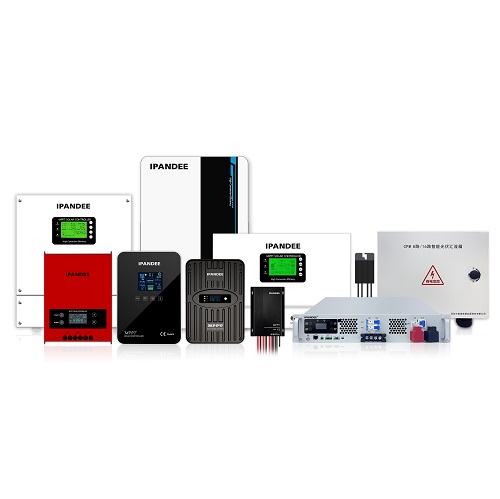
 We are a national key high-tech enterprise integrating R&D, production, sales and service, specializing in the production of MPPT controllers, inverters, UPS, solar energy, wind energy and other energy power products. The main products include industrial grade MPPT solar controllers, solar inverters, solar power systems, UPS and other energy products. It is a leading manufacturer of MPPT controllers in China.
Disclaimer: The content is partly from the internet. In order to pass on more information, it does not mean agreeing to its views or confirming its description. Article content is for reference only. If there is any infringement, please contact in time.
Since 2016, the French power giant ENGIE has become increasingly active in off-grid clean power in India and Africa. The company also acquired a minority stake in Mandalay Yoma Energy this month to focus on the Myanmar national program to complete national electrification in 2030. In Myanmar, at least 27 million people do not have electricity.
Mandalay Yoma director and co-founder Nathalie Risteau told PV Tech that the company has powered 6,000 users, more than half of the government's results in the past two years.
“As a leading company in the mall, we look forward to consolidating our leadership and expanding our scale.”
“There are 30,000 villages in Myanmar that have not yet been electrified. In the next three to five years, we are very happy to assist thousands of villages to complete electrification. On average, each village has 50-100kW of solar power and will be equipped with batteries of different sizes.”

Since its inception in 2014, Mandalay Yoma has taken a leading position in the photovoltaic microgrid industry in Myanmar. In addition to the first project, all of the company's projects combine solar, energy storage and backup diesel power. These projects usually use photovoltaic modules from China's large supplier Jingke Power and Alpha ESS lithium-ion batteries.
All of Mandalay Yoma Energy's solutions are planned for longevity and long-term service. If the transmission capacity reaches a certain point in the future, the system can also be integrated into the national grid. The company also plans a containerized solution that integrates batteries into the inverter to make the microgrid faster.
“Now we don’t need to create special screens for batteries, inverters and monitoring systems.”
“We only need to bring the PV box to the site, we are the base of the components to install and route, but the speed of the entire process is accelerated.”
The last mile of the grid
Based on a new collaborative partnership with ENGIE, Mandalay Yoma Energy will prioritize the development of solar microgrids, especially in villages far from the national grid. These villages are the final stage of electrification because they are too expensive for these villages to pass through the main grid.
“Having them as a primary goal has great potential. For those who see the solar home system as an intermediate solution, this may be another move to be adopted in the future.”
“This is what Myanmar is currently demanding. Myanmar has the opportunity to cross the future without committing the same mistakes as other countries in the region. Traditional hybrids have a higher share in these countries. Myanmar is rich in natural resources. The micro-grid is undoubtedly the answer to the problem of insufficient power supply in the current rural areas."
Myanmar will develop all projects based on the DRD microgrid program, which is consistent with the 2030 National Electrification Program. The program received $400 million from the World Bank to build the off-grid portion of the SHS and microgrid.
"If Myanmar wants to complete the electrification of the entire country, it means that 500,000 households need electricity every year, so it is necessary for Myanmar to start quickly."
“They have been assisted by different organizations of the World Bank and GiZ. With the support of our powerful mall participants, we are very confident that Myanmar is accomplishing this goal, which is why we are very keen to expand. ”
Sol Partners, a subsidiary of Singapore's Mandalay Yoma Energy Holdings, and GDF International SAS, a member of the ENGIE Group, held a contract signing ceremony in Naypyidaw. Representatives from the Ministry of Rural Development, the Ministry of Electricity and Power, the French and European Embassy, the World Bank, GIZ and DICA attended the signing ceremony.
Disclaimer: The content is partly from the internet. In order to pass on more information, it does not mean agreeing to its views or confirming its description. Article content is for reference only. If there is any infringement, please contact in time.
Prev:Solar space, the US exit
Next:China's photovoltaic companies guarantee the Miyako Island project in Japan